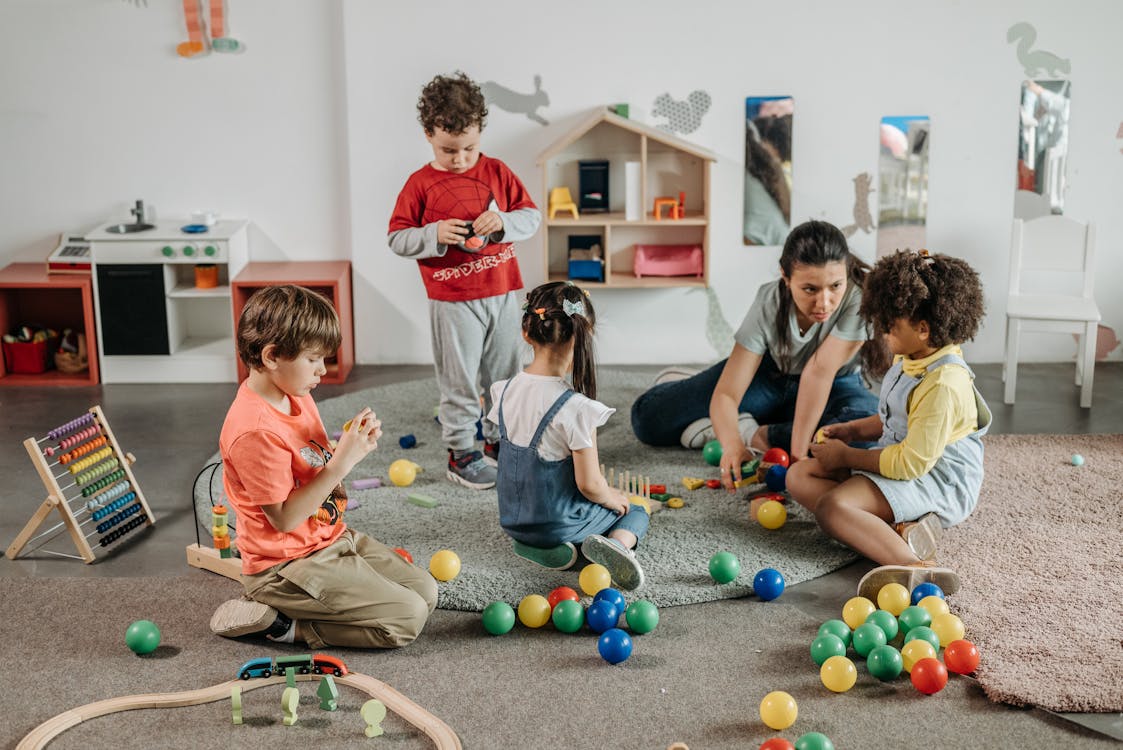
When a four-year-old builds a bridge from blocks, she is doing physics. When he negotiates who plays the doctor, he is doing diplomacy. Creative, play-based learning isn’t the break from education — for young children, it is education.
What research keeps telling us
Decades of early-childhood studies link guided play with stronger language, math reasoning, and self-regulation than drill-based instruction at the same age. Children who explore ideas through play remember them longer and apply them more flexibly.
What it looks like in our rooms
Our teachers set the stage with intention — a provocation table, a story starter, a real-world problem like “how can we keep the playground dry?” — then step into the role of coach and fellow wonderer. Literacy hides in menus children write for the pretend café; math hides in measuring the block tower.
How families can join in
Follow your child’s lead for fifteen unhurried minutes a day. Narrate what you see (“you mixed blue and yellow — look, green!”), wonder aloud, and let them be the expert. That daily deposit of playful attention compounds fast.
Come watch creative learning in action — our doors, paint jars, and dress-up boxes are open.